


TECHNOLOGY
What is a NanoTag?
An octagonal nickel microdot, 6–10 microns thin, carrying a physically etched Security Identification Code and an Optically Variable Device surface — virtually invisible, virtually indestructible.
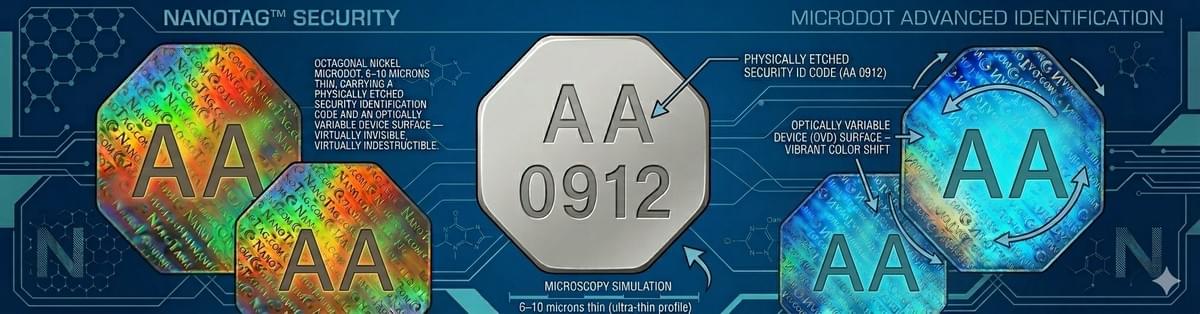
NanoTags are made of nickel, octagon-shaped, 6–10 microns thin and 0.3 mm to 0.7 mm across. One side features a hologram-like nano image — technically an Optically Variable Device (OVD) — displaying changes of colour under different viewing angles. Unlike a real hologram, which appears as a meaningless grey mass under a microscope, NanoTags reveal fine branding detail and brilliant colour at 100× magnification.
The Security Identification Code (SIC) is etched physically through the body of the nickel tag. The same SIC repeats through thousands of NanoTags in each personalised batch, mixed with a proprietary UV-trace adhesive. Once dry, the encased NanoTags become resistant to water, most chemicals, and environments.
NanoTag's nickel substrate supersedes earlier plastic-based microdot technology. Plastic microdots begin deteriorating above 150°C and burn completely at 350°C. NanoTags withstand temperatures over 1,000°C without oxidising — even when adhesive burns away, the tags remain adhered to the surface with all information intact.
Material Nickel (Ni) Shape Octagonal Thickness 6–10 microns Diameter 0.3 mm to 0.7 mm SIC length Up to 17 alphanumeric digits Surface Optically Variable Device (OVD) Adhesive UV-trace proprietary adhesive Max temperature >1,000°C without oxidising Melting point 1,453°C Detection UV torch + 100× portable microscope Batch size 500 to thousands of tags per set IP protection International patents & trade secrets - Application Methods
Five ways to deploy NanoTags
Each applicator is designed for a specific asset type, surface area, or production environment.
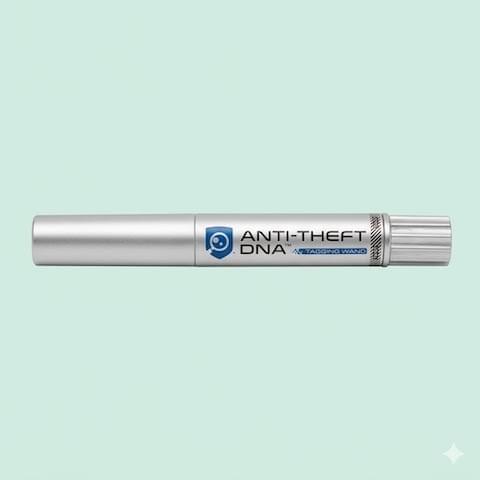 DNA WandWater-based proprietary adhesive dispensed through a soft brush via micro-pump. Ideal for small assets where fast drying is not required. Once dry, the adhesive forms a clear coat resistant to water and solvents. Approximately 100 spot markings per wand.PERSONAL ITEMS
SMALL ASSETS
FIELD USE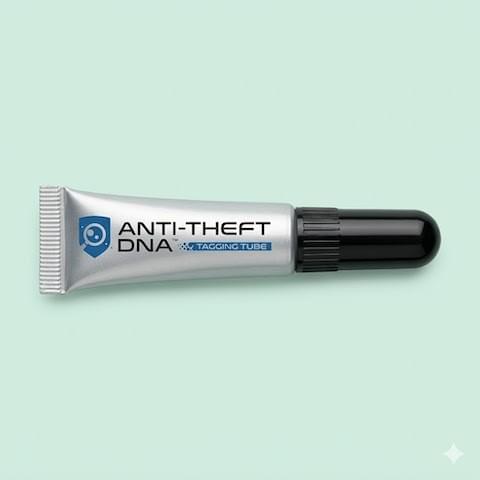 DNA TubeCompact, high-precision marking solution. Squeeze the tube to apply a specially formulated paste to any surface — secure and inconspicuous. Each application contains NanoTags with chemically etched SIC codes and multicolour OVD holograms. Approximately 50 precise applications per tube.TARGETED MARKING
PRECISION WORK
ANY SURFACE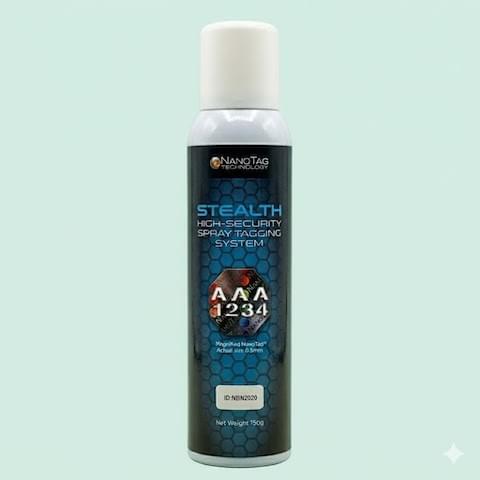 Aerosol Spray CanAvailable in water-based (Eco) and solvent-based (Rapid) adhesive variants. Ideal for motor vehicles, heavy equipment, and large surfaces requiring fast, even coverage across a wide area.VEHICLES
HEAVY EQUIPMENT
LARGE SURFACES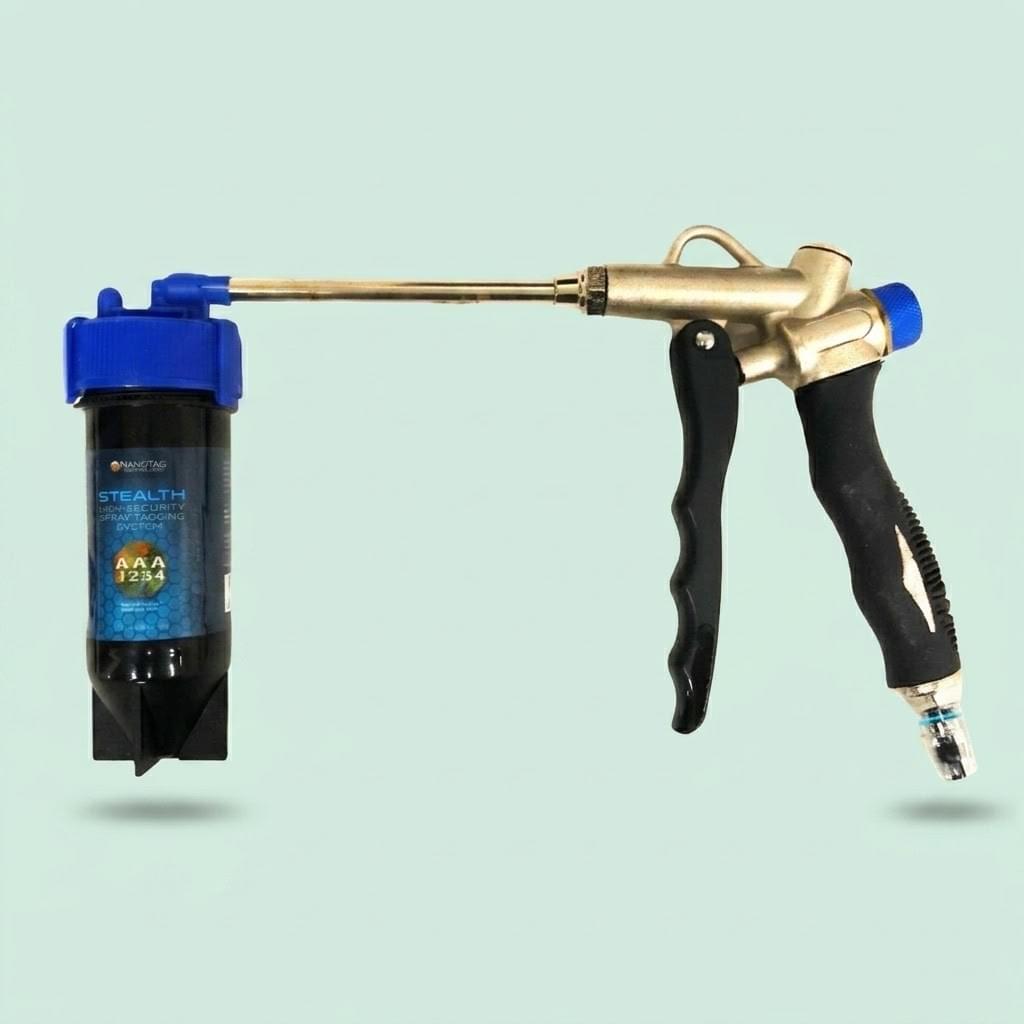 Industrial Spray PotPatented 20,000-particle pot integrated with standard air compressor systems. Enables high-efficiency, uniform, wide-area deployment. Purpose-built for automotive manufacturing lines, mining equipment, heavy machinery production, and agricultural vehicles.MANUFACTURING
MINING
AGRICULTURE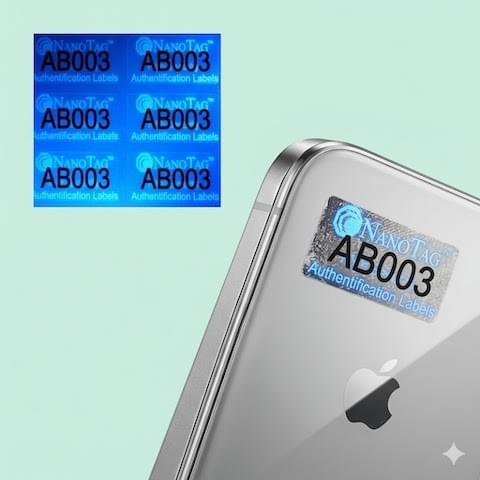 High Security Ghost LabelStickers combining overt and covert security. NanoTags are encased in a clear film, readable under a 60× microscope. Carry customised text visible under UV light alongside the printed SIC code. Designed for personal electronics — mobiles, laptops, cameras.MOBILE DEVICES
LAPTOPS
CAMERAS - Industry Solutions
Deployed across every sector
NanoTag technology is in active use or testing across industries where proof of ownership, theft deterrence, or anti-counterfeiting are critical.
 Heavy IndustryMining equipment, power substations, solar systems, and rental machinery require irrefutable proof of genuine ownership. NanoTags deter theft, rebuff bogus warranty claims, and prove ownership of leased assets.Mining Power Solar Plant Hire
 Brand ProtectionProvides secure anti-counterfeiting for any product. Applied at manufacture using High Security Fusion Tape for woven labels, or thermo powder for paper hang-tags. Fusion tape withstands over 50 wash cycles at 650°C.Clothing Labels Hang Tags Packaging
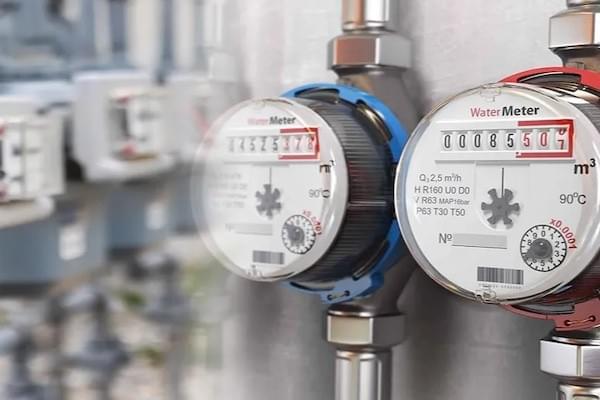 Utilities & MeteringTraditional and smart meters are vulnerable to theft and tampering. NanoTags applied by brush or low-pressure spray permanently mark meters, deterring substitution and fraudulent bypass.Water Meters Electricity Gas
 Automotive & TransportVehicle components marked at manufacture remain permanently linked to the original vehicle if removed. Creates an immutable audit trail for parts. Some countries have mandated microdot fitment for all new vehicles.OEM Fleet EVs Motorcycles
 InsuranceOver 90% of people never record serial numbers of valuable items. NanoTag replaces all individual serial numbers with a single unique SIC, enabling police to trace recovered property to its rightful owner.Home Contents Commercial Motor
 Retail & Anti-TheftCCT cameras and electronic tags are routinely defeated by professional thieves. NanoTag provides a covert layer that cannot be removed at point of sale. Warning decals deter theft before it occurs.Electronics Supermarkets Computer Stores
 - Micro-STR System
Scene Text Recognition for microdots
An industry-leading microdot verification system that makes handheld microscopes and manual transcription entirely redundant.
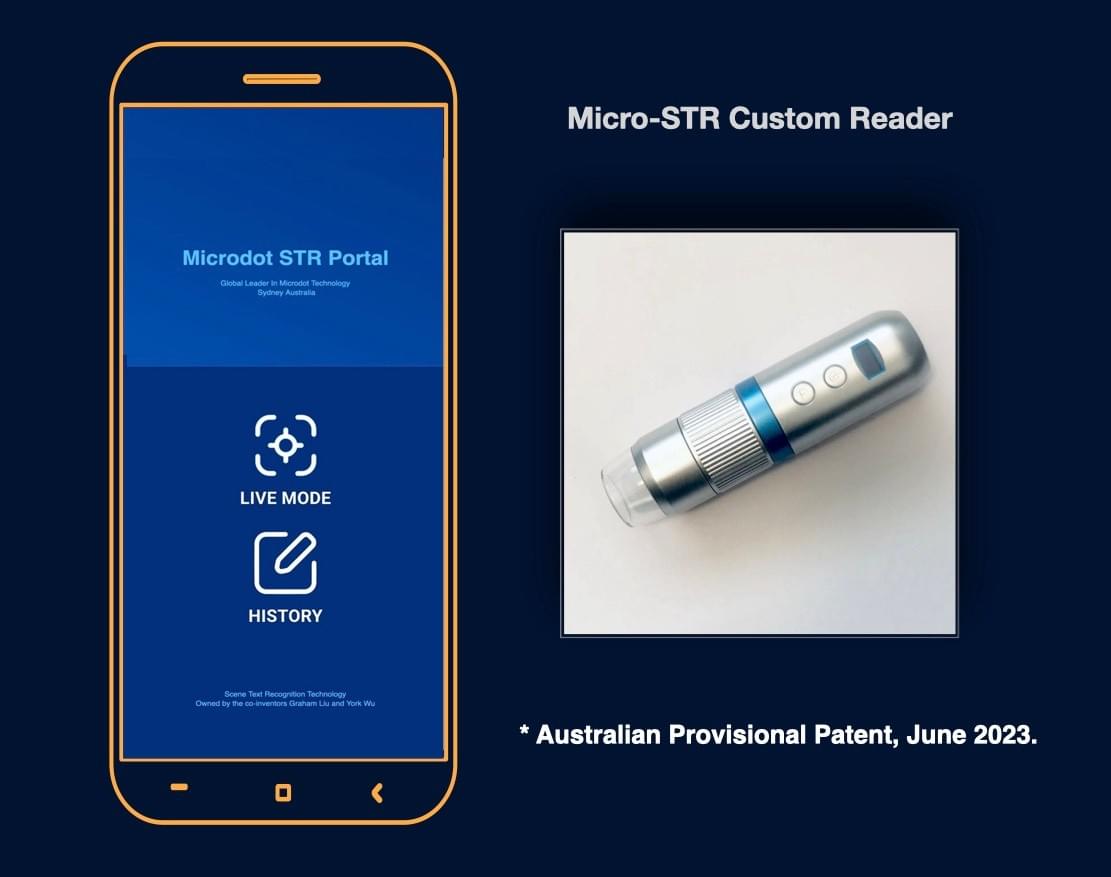
The Micro-STR microdot verification system uses breakthrough Scene Text Recognition technology to decipher microdots as small as 0.3 mm — reading up to 17 characters on a 0.7 mm dot — and instantly checking the code against an ownership database to verify the owner of the asset.
Until now, identifying NanoTag codes required a handheld microscope magnifier and manual recording of the visible data. The Micro-STR Reader and App makes this process entirely electronic, enabling real-time data extraction anywhere — in the field, in difficult environments, without specialist laboratory equipment.
Deployable by law enforcement agencies, insurance and warranty claims investigators, and microdot manufacturers and their distributors worldwide. Available as a SaaS subscription for rapid integration into existing workflows.
Reads dots as small as 0.5 mmSTR technology deciphers microdots previously unreadable without laboratory equipment. A 1 mm dot yields up to 22 characters of SIC data in a single electronic pass.Real-time electronic extractionNo manual transcription. The custom Micro-STR reader captures the code and transmits it to the database check in a single automated step.Works in the fieldDesigned for difficult environments — roadside inspections, warehouse audits, crime scene investigations — where laboratory conditions are unavailable.Live Mode and History logThe app provides a live scanning mode for active verification and a searchable history log for audit trail purposes, accessible via the Microdot STR Portal.Global SaaS deploymentRapid onboarding for law enforcement, insurers, and manufacturers worldwide without infrastructure changes or specialist hardware beyond the custom reader.
